Article
Data Centers 2026: “Ready, Fire, Aim”
November 4, 2026
It is an election year, but Data Centers are not going away no matter the political pandering.
It is important to recognize that technology and innovation have always preceded law, permits and regulation. That is the natural order of things. Were it the other way, requiring governmental approval for a new innovation before implementation would effectively and permanently stifle innovation.
That isn’t to say that regulating an innovation is improper. Virtually every innovation since the introduction of the wheel has met with regulatory guard rails after implementation – regulations designed to protect the public in general, like speed limits for instance. Indeed, industrialization and waste disposal practices, steam engines, indoor electrification, natural gas, indoor plumbing, railroads, nuclear power generation, automobiles, fracking, new chemical compounds, and the internet, to name but just a few, were introduced, implemented, and then following experience, were regulated – not to eliminate them – but to make the activity safer.
At this point, the goal with data centers is to make them safer, not to eliminate them.
Let’s take stock of where things are with data centers in late 2026.
Interestingly, data centers are not new. Rather, they have been around for decades, albeit on a much smaller scale. Law firms, for example, have been storing their electronic data off site for decades, and so have small and large companies, hospitals, engineering practices, and so on. However, those data centers collected and stored individual proprietary data generally accessible only by a single user. Cloud Computing and Artificial Intelligence are new, and both require immediate analysis and access by multiple users to an unfathomable volume of data that grows exponentially every day.
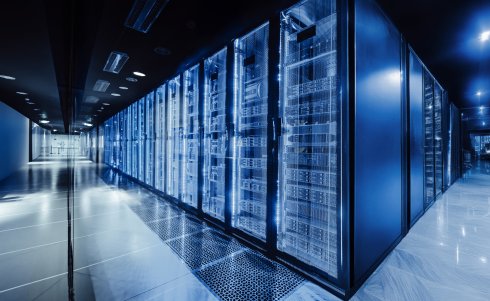
The Law Firm’s off-site data storage facility located on the second floor of a former manufacturing building located in South Bend, Indiana is not a concern. Rather, today’s concern involves data centers that are designed to access data from every online source known to humankind, and then to instantly and accurately analyze that data in order to provide the analyzed data to untold millions of users in milliseconds. Those design specifications require a great deal of computing power, available only from new hyperscale data centers. Hyperscale data centers use enough electricity to operate a small city, but in a confined space. And jamming that computing power into a small space using enough electricity to operate a small city creates significant heat, which requires large volumes of cooling water and operating cooling towers and resultant “blowdown” discharges necessary to reduce the heat and preserve the computing equipment.
Grid stress, grid upgrades, user rates, and impacts to natural resources in the form of water and cooling tower wastewater discharges require immediate attention not otherwise considered with the smaller data centers. Other concerns involve light and noise pollution, public involvement, transparency apparently obscured by non-disclosure agreements or confidentiality clauses included in applications for public permits.
Despite the current political contretemps, hyperscale data centers are in a long line of innovations to be encouraged and not discouraged – but, it is also fair to recognize that it is time to identify and address the risks posed by hyperscale data centers with reasonable guardrails, just like the folks did when mercaptan was added to odorless natural gas to make natural gas fuel less dangerous.
Remarkably, Illinois reportedly leads the country with 242 data centers, 155 in the Chicago metropolitan area alone. See: https://www.datacentermap.com/usa/illinois. It is really a success story in Illinois, even if it was implemented with a ready, fire, aim approach. In 2019, Illinois authorized the Illinois Data Center Investment Program to provide sales and use tax exemptions and other incentives to data center developers. In 2023, the Illinois Economic Development Corporation reported 4.8 million square feet of data centers with 2.2 million square feet then under construction. Through 2024, another 27 applications to the Investment Program were approved, reportedly involving in excess of $15,000,000,000 of investment in Illinois data centers. This was no small feat.
This past summer, the Federal Energy Regulatory Commission (FERC) announced that it is actively pursuing development of reliability standards for power-hungry data centers and recently ordered two western grid operators to coordinate their operations. FERC’s jurisdictional authority is founded on interstate commerce, but the order is breathtaking for its speed and demand for grid reliability standards by the end of 2026.
In response to public concerns over hyperscale data centers, on July 1, 2026, the state of Illinois pumped the brakes on data centers, pausing its review of applications to the Illinois Data Center Investment Program in order to assess consumer costs and environmental impacts such as energy consumption; grid strain; natural resource protection; air, noise, and light pollution as well as closure standards.
Then, on Aug. 11, 2026, the city of Chicago’s mayor issued an executive order requesting that the City Council consider a temporary moratorium on new and expanding data centers until new standards for air pollution, noise control, and natural resources are considered. In the Executive Order, the city recognized that the current regulatory framework was adopted before the implementation of the modern hyperscale data center, and that the city is now seeking a comprehensive regulatory process that addresses increased electrical demands, water resources, air quality, and community involvement before approving new or expanding data centers.
Other states have followed suit.
On Aug. 18, 2026, Pennsylvania’s governor issued an executive order seeking to reset the process of reviewing government authorizations for data centers. Pennsylvania did not impose a moratorium on new data centers, but there will be new standards applied in regulatory review of new and expanding data centers.
Similarly, Virginia’s governor signed an executive order on Sept. 18, 2026, establishing a statewide data center policy aimed at increasing transparency and community involvement in data center projects with an emphasis on addressing environmental concerns, energy costs, and grid reliability, and with limits on new projects that require 25 MW of electricity or more.
Maryland’s governor too issued an executive order on Sept. 23, 2026, establishing a new framework for review of large data center projects, data centers with a projected peak electric demand of 25 MW or more.
California took the concern further by enacting new statutes establishing what California touts as the nation’s most comprehensive regulatory framework governing data center development. The Governor signed those statutes on Sept. 21, 2026, with the focus on energy and water use reporting, actual water use, utility cost allocation and rate structure, and environmental review and project approval.
Congress, too, is expected to provide federal regulators with greater authority to permit data centers access to the interstate power grid, with rules that require large data centers to bear the costs of grid upgrades in order to protect residential customers from paying higher rates associated with data centers.
Yes, it is time to readjust our aim and consider these impacts, and no one is sitting on their hands.
In Illinois, the Illinois General Assembly is considering several proposed legislative responses:
SB 4004 – Aquifer Protection Act
This bill provides that no data center operating within the state shall use water from the Mahomet Aquifer, and it requires existing data centers to transition to alternative water sources and cease all groundwater withdrawals. Also, the proposed legislation prohibits a unit of local government from entering into, enforcing, or renewing any nondisclosure agreement, confidentiality clause, or similar contractual provision that restricts disclosure of information concerning a data center's water use.
HB 5513 and SB 4016 – Hyperscale Data Centers
This proposal seeks to establish comprehensive environmental, water, and energy regulations for hyperscale data centers, requires community benefits agreements, and also prohibits non-disclosure agreements. Among other things, the bill mandates water resource planning, quarterly water usage reporting, water scarcity plans, and water impact permits with public hearings and permit renewal every 5 years.
SB 3830/SB 3761 – Data Centers, Various
This proposal seeks to amend the Illinois Power Agency Act and establish a data center program to allow for customers taking service under the data center tariff to receive a reduction in the charges for using renewable energy resources. The proposal also requires all data centers operating within the state discharging wastewater to identify the likely pollutants in the discharges and to monitor the data center's water discharges for likely pollutants. This proposal requires all data centers within the state to maintain water consumption data and to submit annual disclosures of the data center's water usage to the Department of Natural Resources.
SB 3120 DCEO – Data Centers
This proposal seeks to amend the Department of Commerce and Economic Opportunity Law of the Civil Administrative Code of Illinois in order to provide that a new or existing data center is a qualifying data center under the Act only if it provides in its application details regarding water stewardship strategy.
SB 2181 – Data Center Reporting
This proposal creates the Illinois Data Center Energy and Water Reporting Act and provides that all data centers in Illinois are to submit annual reports describing the data center's energy and water consumption to the Illinois Power Agency.
SB 3162 – Groundwater Withdrawals
Finally, this bill seeks to amend the Water Use Act of 1983 and directs the Department of Agriculture to consider water quantity when restricting groundwater withdrawal and directs the Interagency Coordinating Committee on Groundwater to submit a report to the governor and General Assembly on or before Jan. 1, 2028 on unsustainable depletion of aquifers in the state with a legislative proposal to remedy the problem.
Thus far, we note that current legislative trends focus on water use and aquifer protection, transparency that rejects non-disclosure agreements in favor of public reporting of water and electric use and future permitting, as well as incentives that consider sustainability and resource management.
It is the natural order of things with reasonable regulations following innovation.