Client Alert
What the Rollins Enforcement Action Really Means for Multistate Employers
April 16, 2026
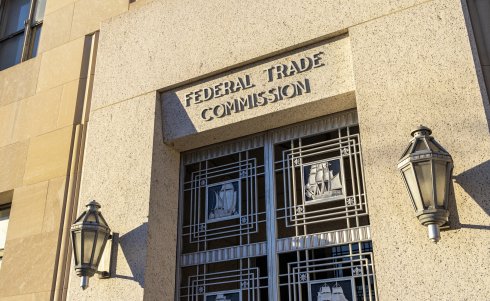
The FTC’s April 15, 2026 enforcement action against Rollins, Inc. should be viewed less as an isolated dispute over non-compete agreements and more as a roadmap for future federal enforcement. For multistate employers, the case reveals not just what the FTC is challenging, but how it is reframing non-competes as a structural competition issue rather than a contract enforceability question.
Background of the Enforcement Action
According to the FTC complaint, Rollins operates more than 700 locations nationwide and employs more than 18,000 U.S.-based workers. The company maintained a longstanding policy requiring virtually all newly hired employees, regardless of their role, responsibilities, or access to confidential information, to enter into post‑employment non-compete agreements.
The challenged non-compete provisions typically restricted employees, for two years after the end of their employment, from working in the pest control industry within 75 miles of their work location. The FTC alleged that the vast majority of Rollins’ workforce — including customer service representatives and pest control technicians — was subject to these restrictions.
On April 15, the FTC and Rollins published their Consent Agreement to resolve the complaint. In it, Rollins consented to an injunction that prohibited them from, among other things:
In addition, the consent agreement required Rollins to inform employees, in writing, that its non-compete agreements were no longer enforceable.
The FTC is Recasting Non-competes as a Market-Structure Problem
A critical feature of the Rollins complaint is how the FTC framed the non-competes used by Rollins. The FTC does not treat non-competes as an individual employment issue, but as a mechanism that distorts labor market competition at scale.
The agency repeatedly emphasized:
This is a deliberate shift. Rather than litigating whether a given non-compete is “reasonable,” the FTC asserted that the systemic use of non-competes, even if compliant with state law, can function as an unfair method of competition.
Uniformity is a Liability, Not a Defense
Historically, employers have favored uniform restrictive covenant programs to:
Ironically, Rollins shows that uniformity is now an enforcement trigger. The FTC emphasized that the uniform non-compete program relied upon by Rollins was an essential component of its liability. Specifically, the FTC pointed to the following:
These facts allowed the FTC to argue that:
Enforcement Conduct Now Matters as Much as Contract Language
One of the more consequential aspects of the Rollins complaint is the attention paid to how the company enforced its non-competes. The FTC highlighted:
This matters because it allowed the FTC to frame enforcement itself as coercive conduct, even where litigation may have been legally permissible under state law.
State Law is a Floor, Not a Shield
Perhaps the most important takeaway for multistate employers is that state‑law enforceability is no longer dispositive. The FTC’s theory explicitly assumed that non-competes:
This creates a layered compliance environment:
For multistate employers, this represents a fundamental paradigm shift. Compliance strategies that often focus on state‑specific drafting must now include an assessment of potential federal antitrust risk.
The FTC is Signaling Preferred Alternatives
The Rollins complaint does more than criticize non-competes; it explicitly endorsed alternatives, including:
Importantly, the FTC does not merely suggest these alternatives, it alleges that Rollins did not need non-competes at all to protect its interests.
Strategic Implications for Multistate Employers
The FTC made clear that the more a company relies on national templates, standardized onboarding, and centralized enforcement, the more easily the FTC can argue competitive harm across labor markets. This means that multistate employers should assume the more “plug‑and‑play” their non-compete program is, the more vulnerable it is to federal scrutiny — regardless of whether it complies with any single state’s law.
Further, employers using aggressive enforcement tactics can now be cited as evidence that non-competes suppress mobility and competition — even if the underlying agreement is never adjudicated unlawful This framing puts employers in a difficult position: Not enforcing non-competes undermines their deterrent value, while engaging in systematic enforcement may increase regulatory exposure.
Finally, the FTC is likely to argue in future enforcement actions that employers that could use less restrictive tools, but choose not to, are acting unreasonably, regardless of historical practice. This places increased pressure on employers to justify, first, why non-competes are necessary; second, for which roles they are necessary; and third, why more narrowly tailored alternatives would be insufficient.
What Multistate Employers Should Be Doing Now
From a risk‑management perspective, the Rollins action suggests employers should move beyond simple contract audits and toward program‑level redesign:
Conclusion
The FTC’s action against Rollins sends a clear message to multistate employers: Expansive non-compete programs are no longer evaluated solely through the lens of state contract law. Federal antitrust enforcement is now a central risk consideration. Employers should proactively audit restrictive covenant agreements, reassess whether non-competes are truly necessary, and consult counsel to align employment practices with this evolving enforcement environment.
If you have questions about non-compete agreements, please contact your UBG attorney or Chris Pickett at cpickett@ubglaw.com.
The information provided in this alert speaks only to the information and guidance we have available as of the date of publication and is subject to change. This legal update was created by UB Greensfelder LLP and is not intended as a substitute for professional legal advice. Receipt, by itself, does not create an attorney-client relationship. For any questions, or for further information, please contact your UB Greensfelder attorney.