Publication
UB Greensfelder Co-Head On Fusing Merged Firms
October 25, 2024 – Law360 Pulse
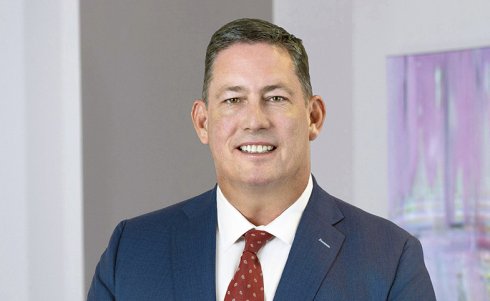
By Emma Cueto, Reporter, Law360 Pulse
Law360 (October 25, 2024, 4:28 PM EDT) -- Just under nine months after the merger of its predecessor firms became effective, a co-managing partner of UB Greensfelder LLP tells Law360 Pulse that the firm successfully navigated its integration process by making decisions collaboratively, being thoughtful about what to retain from each firm, and putting in the time necessary to work through every issue.
After announcing a merger of equals in late 2023, Ulmer & Berne LLP and Greensfelder Hemker & Gale PC officially became UB Greensfelder on Feb. 1, bringing together two Midwest-based firms into a new entity with 275 attorneys.
Former Greensfelder Hemker CEO and current UB Greensfelder co-managing partner Kevin McLaughlin talked to Law360 Pulse about how the firms approached the integration, why he thinks it was a successful process, and what he wishes he'd known before the merger.
The merger went into effect Feb. 1, is that right?
That's correct.
Overall, how would you say things have been going for the new firm in the almost nine months since then?
It's actually gone extremely well, better than I could have hoped, frankly. Part of that is the timing, and the fact that we had been speaking to each other off and on for almost seven years. The first meeting
between our firms took place in 2017, if you can believe that. So there weren't a lot of surprises; we
really knew each other well.
And things have been going great. Our people are working together well and integrating well. We're seeing a lot of cross-office collaboration. We're seeing positive impacts on our client service and client offerings. So it's been a really good first year so far.
Obviously there are a lot of different components to a transition like this, one of which you were alluding to, which is the people and how they work together. What are some strategies you employed to ensure that everyone comes together?
By the effective date of Feb. 1, our leadership teams and practice group managers and industry group leaders had all been together multiple times. They were familiar with one another and had already started working on their practice plans and industry group plans for the coming years, so when we hit Feb. 1, there was already that level of familiarity at the level of management, and there was a "hit the ground running" approach.
Another thing we did on the people side was that we brought all our partners together in Chicago in May, so just three months or so after the merger, and got everyone together for some productive meetings, but also meetings designed to help people get to know each other in a personal way. And that, I think, has really helped with the cross-office collaboration, because you're not sending work to or asking to collaborate with a stranger. It's people you remember, you've met, you've had conversations with.
So on the people front we were very intentional about getting everyone together early and fostering those relationships.
The other part is, you also can't underestimate the importance of technology. In a merger of equals, it's a little more difficult than if one firm is acquiring the other. If one firm is acquiring the other, you just put the acquiree on the other firm's technology platform and off you go, but this was a merger of equals, so we had to address all the tech issues and look for best practices.
First thing we did was get our email on the same platform; that was a major lift. Then we got our document platform on the same system; that was a major lift that really facilitated cross-office collaboration. Then it was the accounting systems.
As I've, anecdotally, spoken to other law firm leaders and others who've been through this process, the fact we had all those platforms integrated in the first six months was quite an accomplishment — a big shout-out to our IT team for leading it.
And that was my next question, which is that beyond attorneys working together, there's obviously a lot of business process stuff that has to be integrated in a merger. Were there other challenges there?
The challenge was getting it done, making sure we were able to successfully integrate. But our chief information officer had been involved in a prior law firm merger in the last five years. He was a legacy Ulmer employee who had come back to us, and brought a lot of lessons that helped make this a smooth process.
Are there things you wish you had known going into this process? What do you wish you could go back and tell yourself at the beginning of the process?
I think I may have underestimated the amount of effort it takes to do this. Thankfully it's not just me — we have a great managing team, and I have a great co-managing partner who's a fantastic guy. That relationship has been crucial, and it's been great.
But in a merger of equals, you have to talk about everything. We made a commitment we weren't going to do everything one firm's way or the other firm's way. We were going to analyze all of these issues and adopt a best-practices approach. Which is outstanding, and I think really positions us for success, but it means you have got to talk about everything.So I think if I were talking to myself last year, I would say, "Strap in, because it's going to be a lot of heavy lifting!"
Frankly, one of our first consultants when we were talking in 2019 told us that's why mergers of equals don't often happen, because there's so much work involved.
Going in, I imagine there were a lot of things you hoped the merger would achieve. Has that been working out so far?
One of the key things we hoped would happen from a client perspective is that our increased depth and breadth would open doors that the legacy firms couldn't open, and we've seen that for sure. We've been invited to the table and landed clients that are of a size they would not have considered the legacy firms but do consider us now.
Both firms also had a practice the other didn't have. Ulmer had an immigration practice Greensfelder didn't have; Greensfelder had a franchise practice Ulmer didn't have. And what we've seen, critically, is expansion of existing client relationships using those, especially immigration. We have a large healthcare client that is now using our immigration services, which is something Greensfelder couldn't offer because we didn't have the service.
So those things we hoped would happen are happening.
Looking to the future, what do you hope to happen over the next year?
There's the inward-facing part and the outward-facing part. Inward, we have to be very intentional about continuing to foster that mentality, because it's important for the firm.
Outwardly, we are still looking to grow — nothing of the size and scope we just did; I think that was transformational for both firms. But in terms of adding new practice areas to the firm, looking at geographic regions that make sense with our industry focus or client focus. So targeted growth. And there are conversations that are going on now that I think are because of our increased platform.
All of it is driven by client service: How can we better help our clients? That's the mission.
Is there anything else you wanted to mention about the merger?
One thing is, I mentioned we'd been talking to each other for some time, with stops and starts. When we started, my predecessor was still there, Tim Thornton, who tragically passed in 2019 in an accident. After we announced the merger, I got a call from Tim's widow who said, "I want to let you know, Tim probably talked to hundreds of law firms over the years and would come home and tell me it was a waste of time. But the one where he said there was a real chance here was when he first met Ulmer."
That gave me chills at the time, and it still does. It was a very meaningful message from her.
--Editing by Peter Rozovsky.
All Content © 2003-2024, Portfolio Media, Inc.